
How AI is Changing FMCG Marketing in 2026
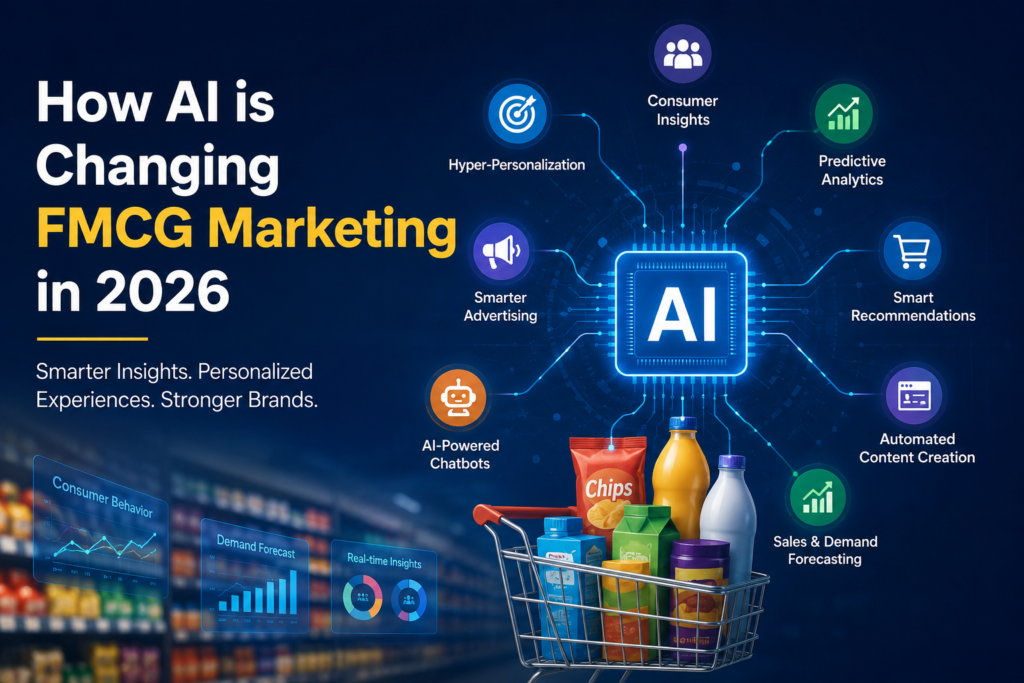
Artificial Intelligence (AI) is no longer a futuristic concept for Fast-Moving Consumer Goods (FMCG) brands. In 2026, AI has become a core driver of marketing innovation, helping brands understand consumers better, create personalized experiences, optimize advertising spend, and accelerate content production. From global giants to emerging D2C brands, AI is transforming how FMCG companies connect with customers and drive growth.
The Growing Role of AI in FMCG Marketing
Today’s consumers expect personalized, relevant, and seamless experiences across every touchpoint. Traditional marketing approaches often struggle to keep pace with changing consumer preferences and market dynamics. AI bridges this gap by analyzing vast amounts of data in real time and turning insights into actionable marketing strategies.
Brands are now using AI to:
- Understand customer behavior patterns
- Predict purchasing decisions
- Personalize product recommendations
- Automate content creation
- Optimize advertising campaigns
- Improve customer engagement
- Forecast market trends
Hyper-Personalization at Scale
One of the biggest changes AI has brought to FMCG marketing is hyper-personalization. Instead of targeting broad customer segments, brands can now create highly personalized experiences for individual consumers.
AI analyzes factors such as:
- Purchase history
- Browsing behavior
- Demographics
- Location
- Seasonal preferences
- Social media interactions
This allows brands to deliver tailored product recommendations, personalized email campaigns, and dynamic advertisements that resonate with each customer.
Example:
A skincare brand can recommend different products based on a customer’s skin type, age, climate, and previous purchases, significantly increasing conversion rates.
AI-Powered Content Creation
Creating high-quality marketing content at scale has traditionally been time-consuming and expensive. In 2026, AI-powered tools are helping FMCG brands generate:
- Product descriptions
- Social media posts
- Advertising copy
- Blog articles
- Product packaging concepts
- Video scripts
- AI-generated visuals
This enables marketing teams to launch campaigns faster while maintaining consistency across multiple channels.
Benefits:
- Reduced content production costs
- Faster campaign execution
- Improved content personalization
- Increased marketing efficiency
Smarter Advertising and Media Buying
AI is revolutionizing digital advertising by optimizing campaigns in real time. Instead of manually adjusting budgets and targeting settings, AI systems continuously analyze performance data and automatically make improvements.
AI helps marketers:
- Identify high-performing audiences
- Predict conversion likelihood
- Optimize ad placements
- Reduce wasted ad spend
- Improve return on investment (ROI)
As a result, FMCG brands can achieve better campaign performance with lower acquisition costs.
Predictive Consumer Insights
Understanding what consumers will buy next is becoming one of AI’s most valuable capabilities.
Using predictive analytics, brands can:
- Forecast demand
- Identify emerging trends
- Anticipate customer needs
- Optimize inventory planning
- Launch products at the right time
This proactive approach helps FMCG companies stay ahead of competitors and respond quickly to market changes.
AI in Social Media Marketing
Social media remains a key marketing channel for FMCG brands. AI is helping marketers monitor conversations, analyze sentiment, and identify viral trends before they become mainstream.
AI tools can:
- Track brand mentions
- Analyze customer sentiment
- Discover trending topics
- Recommend optimal posting times
- Generate engaging social media content
This allows brands to create more relevant and timely campaigns.
Enhanced Customer Experience
Consumers increasingly expect instant support and seamless interactions. AI-powered chatbots and virtual assistants are helping FMCG brands provide 24/7 customer service.
Benefits include:
- Faster response times
- Personalized support
- Reduced customer service costs
- Higher customer satisfaction
AI-driven customer engagement creates stronger relationships and improves brand loyalty.
AI and Retail Media Growth
Retail media networks are becoming one of the fastest-growing advertising channels for FMCG brands. AI helps marketers maximize performance by analyzing shopper behavior and delivering highly targeted ads within retail platforms.
This allows brands to reach consumers closer to the point of purchase, increasing conversion opportunities.
Challenges FMCG Brands Must Address
While AI offers significant benefits, successful adoption requires careful planning.
Key challenges include:
- Data privacy concerns
- Maintaining brand authenticity
- Managing AI-generated content quality
- Ethical AI usage
- Employee training and adoption
Brands that balance automation with human creativity will gain the greatest competitive advantage.
The Future of FMCG Marketing
In 2026 and beyond, AI will continue to reshape FMCG marketing through greater personalization, predictive intelligence, automation, and customer-centric experiences. Brands that embrace AI strategically will be better positioned to improve efficiency, strengthen customer relationships, and drive sustainable growth.
The future belongs to FMCG companies that combine the power of AI with human creativity to deliver meaningful and memorable consumer experiences.