
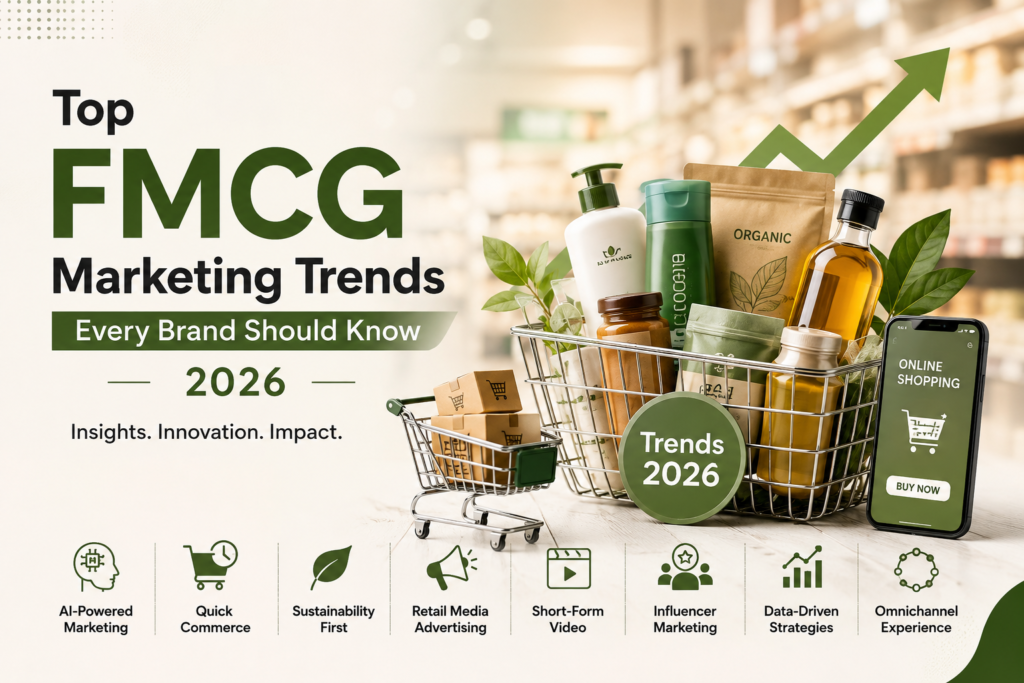
Top FMCG Marketing Trends Every Brand Should Know in 2026
Introduction
The Fast-Moving Consumer Goods (FMCG) industry is evolving faster than ever. Consumer expectations have shifted from simply purchasing products to seeking meaningful experiences, sustainable choices, and personalized interactions. With artificial intelligence, retail media, quick commerce, and data-driven marketing becoming mainstream, brands that fail to adapt risk losing market share.
In 2026, successful FMCG marketing is no longer about reaching the largest audience—it’s about reaching the right customer at the right moment with the right message.
Whether you’re launching a new FMCG brand or scaling an established business, understanding the latest marketing trends can help you stay ahead of competitors and build long-term customer loyalty.
1. AI-Powered Personalized Marketing
Artificial Intelligence has become one of the biggest drivers of FMCG marketing success. Modern AI tools analyze customer behavior, purchase history, browsing patterns, and demographics to create highly personalized campaigns.
Instead of showing the same advertisement to everyone, brands now deliver tailored recommendations, offers, and content based on individual preferences.
Benefits
- Higher engagement rates
- Better customer retention
- Improved advertising ROI
- Faster campaign optimization
Example: A snack brand can recommend healthier products to fitness enthusiasts while promoting family-sized packs to households with children.
2. Quick Commerce Is Changing Consumer Expectations
Consumers increasingly expect everyday products to arrive within minutes rather than days. Quick commerce platforms have transformed how FMCG brands approach product visibility, inventory planning, and promotions.
Marketing now focuses not only on attracting customers but also on ensuring products appear prominently within quick commerce apps.
Why It Matters
- Faster purchase decisions
- Increased impulse buying
- Better local targeting
- Higher product discoverability
Brands that optimize product listings, images, pricing, and promotions for quick commerce platforms gain a competitive advantage.
3. Sustainability Is a Major Purchase Driver
Environmental awareness continues to influence buying decisions. Consumers increasingly prefer brands that demonstrate responsible manufacturing, recyclable packaging, and ethical sourcing.
Sustainability has become an essential part of brand identity rather than simply a marketing message.
Popular Sustainability Initiatives
- Recyclable packaging
- Reduced plastic usage
- Eco-friendly ingredients
- Carbon footprint reduction
- Ethical sourcing
Brands that communicate these initiatives clearly build stronger trust and customer loyalty.
4. Retail Media Advertising Is Growing Rapidly
Retail media allows brands to advertise directly on retailer websites and shopping apps, reaching customers while they are actively making purchase decisions.
Instead of relying solely on social media or search engines, FMCG brands are investing more in retail advertising because it reaches high-intent shoppers.
Benefits
- Higher conversion rates
- Better audience targeting
- Measurable campaign performance
- Improved return on ad spend
Retail media has become one of the fastest-growing advertising channels in the FMCG industry.
5. Short-Form Video Continues to Dominate
Consumers increasingly engage with short videos that educate, entertain, or demonstrate products quickly.
Brands use these videos to showcase:
- Product benefits
- Before-and-after results
- Behind-the-scenes manufacturing
- Customer testimonials
- Usage tutorials
Authentic, informative content often performs better than highly polished advertisements because it feels more relatable.
6. Influencer Marketing Is Becoming More Authentic
Rather than partnering only with celebrities, many FMCG brands now collaborate with niche creators who have highly engaged communities.
Micro and nano influencers often generate stronger trust because their recommendations feel more genuine.
Advantages
- Better engagement
- Higher credibility
- Lower campaign costs
- Stronger local influence
Long-term partnerships typically deliver better results than one-time sponsored posts.
7. First-Party Data Is Becoming Essential
As privacy expectations evolve, brands are placing greater emphasis on collecting first-party data directly from customers through websites, loyalty programs, email subscriptions, and mobile apps.
This data helps brands understand purchasing behavior while maintaining transparency with customers.
Common Sources
- Loyalty programs
- Website registrations
- Product registrations
- Email newsletters
- Mobile applications
Brands that responsibly use first-party data can create more relevant customer experiences.
8. Omnichannel Marketing Creates Consistent Experiences
Modern consumers interact with brands across multiple touchpoints before making a purchase.
A customer may:
- Discover a product on social media
- Read online reviews
- Visit a retailer’s website
- Purchase through a quick commerce app
- Share feedback online
Maintaining consistent messaging, visuals, and offers across these channels strengthens brand recognition and trust.
9. Premium Packaging Improves Brand Perception
Packaging has become an important marketing tool rather than just product protection.
Modern packaging helps communicate:
- Product quality
- Brand values
- Sustainability
- Premium positioning
- Ease of use
Minimalist designs, clear labeling, and thoughtful materials often improve shelf appeal and customer confidence.
10. Community Building Is Driving Long-Term Growth
The most successful FMCG brands invest in relationships rather than one-time transactions.
Communities can be built through:
- Social media engagement
- Customer feedback programs
- Loyalty rewards
- Educational content
- Brand events
- User-generated content
Customers who feel connected to a brand are more likely to make repeat purchases and recommend products to others.
Key Takeaways
The FMCG landscape in 2026 is shaped by technology, convenience, personalization, and trust. Brands that embrace these trends can strengthen customer relationships and adapt to changing market expectations.
Successful FMCG marketing increasingly depends on:
- Using AI to personalize customer experiences
- Optimizing products for quick commerce
- Demonstrating genuine sustainability efforts
- Investing in retail media advertising
- Creating engaging short-form videos
- Building authentic influencer partnerships
- Leveraging first-party data responsibly
- Delivering consistent omnichannel experiences
- Designing packaging that reflects brand values
- Building loyal customer communities
Rather than adopting every trend at once, brands should identify the approaches that best align with their audience, products, and business goals.
Conclusion
FMCG marketing in 2026 is no longer just about selling products—it’s about creating meaningful customer experiences at every stage of the buying journey. Consumers expect convenience, transparency, personalization, and value from the brands they choose.
Businesses that combine data-driven decision-making with authentic storytelling, thoughtful packaging, and customer-focused innovation will be better positioned for long-term growth. By staying informed about emerging trends and adapting strategically, FMCG brands can remain competitive in a rapidly evolving marketplace while building lasting relationships with their customers.