
How AI is Changing Consumer Buying Decisions
Meta Title
How AI is Changing Consumer Buying Decisions in 2026
Meta Description
Discover how Artificial Intelligence is influencing consumer buying decisions through personalized recommendations, AI shopping assistants, predictive analytics, and smarter customer experiences.
How AI is Changing Consumer Buying Decisions
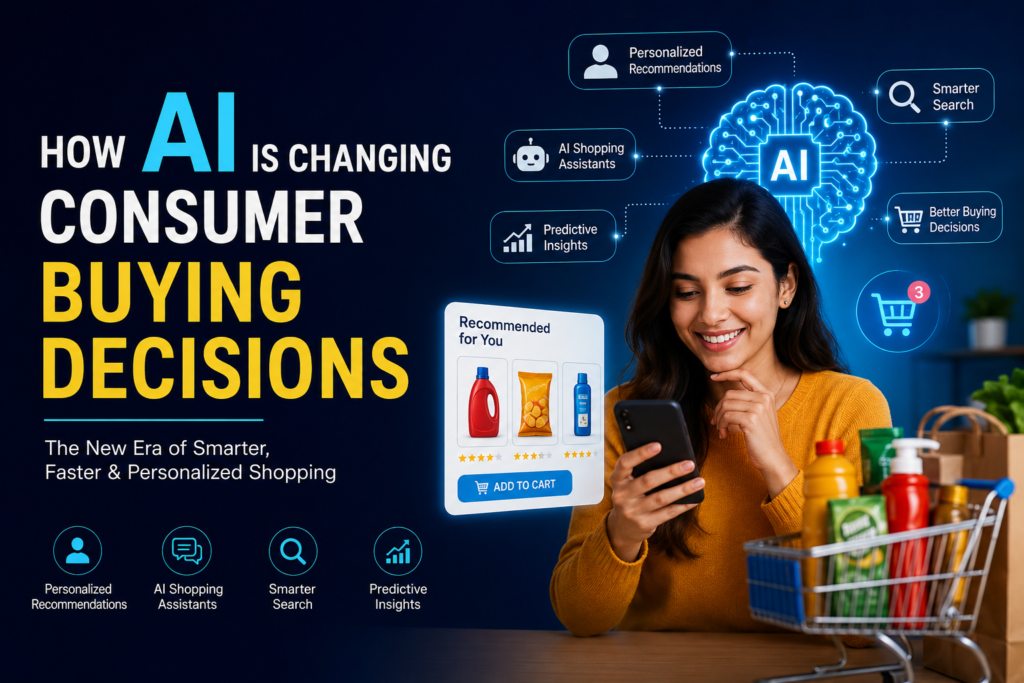
The way consumers discover, compare, and purchase products is changing rapidly. In 2026, Artificial Intelligence (AI) has become one of the biggest influences on buying behavior. From personalized product recommendations to AI-powered shopping assistants, consumers are making decisions faster and more confidently than ever before.
For FMCG brands, retailers, and marketers, understanding this shift is essential to staying competitive in an increasingly digital marketplace.
1. Personalized Shopping Experiences
Modern consumers expect brands to understand their preferences. AI analyzes browsing history, purchase behavior, demographics, and engagement patterns to deliver highly personalized experiences.
Examples include:
- Customized product recommendations
- Personalized email campaigns
- Dynamic website content
- Tailored promotional offers
When consumers see products that match their interests, they are more likely to make a purchase.
2. AI-Powered Product Recommendations
Recommendation engines have become a powerful sales tool.
AI can predict what customers may want next by analyzing:
- Previous purchases
- Search behavior
- Shopping patterns
- Similar customer preferences
This reduces decision fatigue and helps consumers find relevant products quickly.
For FMCG brands, recommendation systems can significantly increase conversion rates and average order value.
3. Smarter Search and Product Discovery
Traditional keyword searches are being replaced by AI-driven search experiences.
Consumers can now search using:
- Natural language queries
- Voice commands
- Image recognition
- AI chat assistants
Instead of scrolling through hundreds of products, shoppers receive curated suggestions that match their exact needs.
4. The Rise of AI Shopping Assistants
AI shopping assistants are becoming digital purchasing advisors.
These assistants can:
- Compare products
- Answer questions instantly
- Suggest alternatives
- Provide personalized recommendations
- Help users complete purchases
Consumers increasingly trust AI assistants to simplify complex buying decisions.
5. Better Consumer Reviews Analysis
Reading hundreds of reviews is time-consuming.
AI now summarizes customer feedback by highlighting:
- Key advantages
- Common complaints
- Product performance trends
- Consumer sentiment
This helps shoppers make informed decisions faster.
6. Predictive Buying Behavior
AI can predict future consumer needs based on historical data.
For example:
- Recommending household essentials before they run out
- Suggesting seasonal products
- Anticipating lifestyle changes
Predictive recommendations create convenience and improve customer satisfaction.
7. Increased Trust Through Relevant Experiences
Consumers are more likely to trust brands that consistently provide relevant content and recommendations.
AI helps brands:
- Deliver accurate product information
- Reduce irrelevant advertising
- Improve customer service
- Create seamless shopping journeys
Trust directly impacts purchasing decisions and long-term brand loyalty.
8. AI Influences Impulse Purchases
AI algorithms are designed to identify purchasing opportunities.
Techniques include:
- Real-time recommendations
- Limited-time offers
- Personalized discounts
- Cross-selling suggestions
These strategies encourage spontaneous purchases while improving the overall customer experience.
9. Voice Commerce Is Growing
With smart devices becoming more common, voice shopping is gaining popularity.
Consumers can:
- Reorder products
- Search for product information
- Compare prices
- Make purchases using voice commands
AI makes the process faster and more convenient.
10. Hyper-Personalization Is the Future
The next evolution of consumer buying behavior is hyper-personalization.
AI combines data from multiple touchpoints to create unique shopping experiences for every individual customer.
This includes:
- Personalized pricing
- Customized product bundles
- Individualized content
- AI-generated recommendations
Brands that embrace hyper-personalization will gain a significant competitive advantage.
Conclusion
Artificial Intelligence is no longer just a technology trend—it is reshaping how consumers discover, evaluate, and purchase products. From personalized recommendations and AI shopping assistants to predictive analytics and voice commerce, AI is making buying decisions smarter, faster, and more convenient.
For FMCG brands, adapting to AI-driven consumer behavior is no longer optional. Companies that leverage AI effectively will build stronger customer relationships, improve conversions, and stay ahead in the evolving marketplace.