
AI Shopping Assistants: The Next Big Opportunity for FMCG Companies
Introduction
The way consumers shop is evolving rapidly. From browsing store aisles to scrolling through e-commerce apps, purchasing decisions are increasingly influenced by technology. Now, a new wave of innovation is transforming the retail landscape: AI Shopping Assistants.
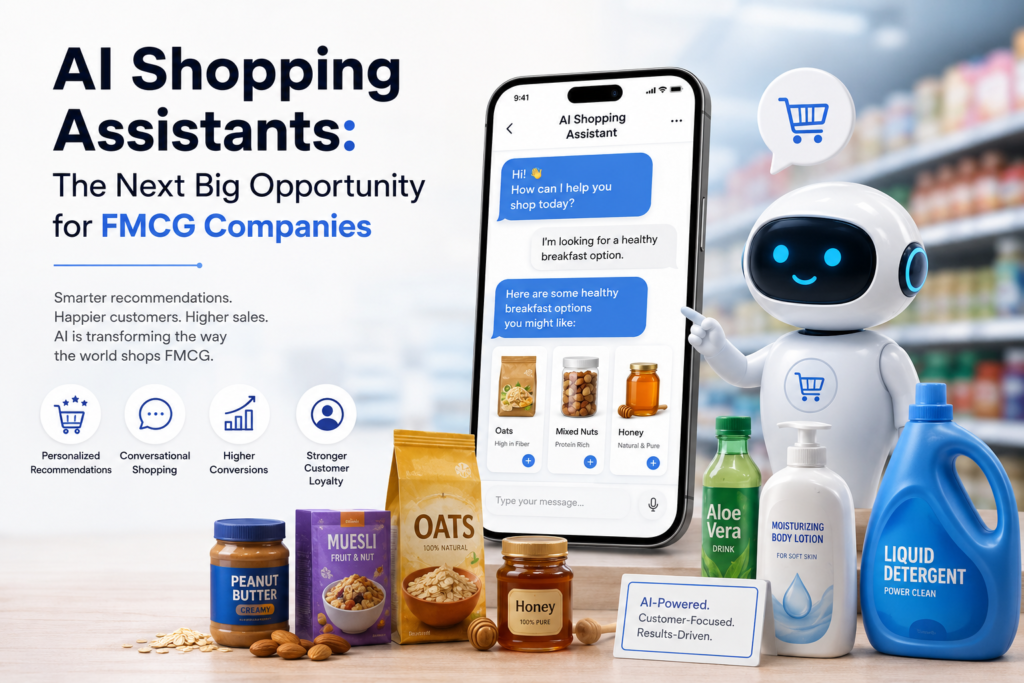
Powered by artificial intelligence, these digital assistants help consumers discover products, compare options, receive personalized recommendations, and make faster purchasing decisions. For FMCG (Fast-Moving Consumer Goods) brands, AI shopping assistants represent a powerful opportunity to increase visibility, improve customer engagement, and drive sales in an increasingly competitive market.
What Are AI Shopping Assistants?
AI shopping assistants are intelligent digital tools that use machine learning, natural language processing, and consumer data to guide shoppers throughout their buying journey.
Examples include:
- AI-powered chatbots
- Voice assistants
- Personalized recommendation engines
- Virtual shopping advisors
- Conversational AI integrated into e-commerce platforms
These tools can answer customer questions, suggest products based on preferences, and provide real-time support during the shopping process.
Why AI Shopping Assistants Matter for FMCG Brands
Unlike high-consideration purchases, FMCG products are often bought quickly and repeatedly. Consumers typically spend only a few seconds deciding between similar products.
AI shopping assistants can influence these decisions by:
1. Delivering Personalized Recommendations
AI analyzes customer behavior, purchase history, demographics, and preferences to recommend products that match individual needs.
For example:
- Suggesting a moisturizing body wash for customers with dry skin.
- Recommending sugar-free beverages to health-conscious consumers.
- Promoting eco-friendly household products to sustainability-focused buyers.
This level of personalization increases conversion rates and customer satisfaction.
2. Improving Product Discovery
Many FMCG products struggle with visibility due to crowded marketplaces.
AI shopping assistants help consumers discover products by:
- Understanding natural language queries.
- Recommending relevant alternatives.
- Highlighting new launches.
- Matching products with specific customer requirements.
This creates valuable opportunities for emerging FMCG brands to compete with larger players.
3. Increasing Customer Engagement
Modern consumers expect instant responses and seamless experiences.
AI assistants provide:
- 24/7 customer support
- Product information
- Ingredient explanations
- Usage recommendations
- Order tracking assistance
This enhances customer trust while reducing support costs.
AI Shopping Assistants in E-Commerce
Online retailers are investing heavily in AI-powered shopping experiences.
Key applications include:
Smart Product Recommendations
AI suggests complementary products such as:
- Shampoo + Conditioner
- Coffee + Creamer
- Body Wash + Moisturizer
This increases average order value and boosts cross-selling opportunities.
Conversational Shopping
Instead of searching through hundreds of products, consumers can simply ask:
“Which face wash is best for oily skin?”
The AI assistant instantly recommends suitable options based on product attributes and user preferences.
Predictive Reordering
For frequently purchased FMCG products, AI can predict when consumers are likely to run out and send timely reminders or automated reorder suggestions.
Benefits for FMCG Companies
Higher Sales Conversion
Personalized recommendations help shoppers make decisions faster, increasing purchase likelihood.
Better Customer Insights
AI gathers valuable data about:
- Shopping habits
- Product preferences
- Search behavior
- Purchase frequency
These insights help brands improve marketing and product development strategies.
Reduced Customer Acquisition Costs
By delivering relevant recommendations, AI improves conversion efficiency and marketing ROI.
Improved Customer Loyalty
A personalized shopping experience creates stronger brand relationships and encourages repeat purchases.
The Rise of Voice Commerce
Voice-enabled AI assistants are becoming increasingly popular.
Consumers can now purchase FMCG products using simple voice commands such as:
- “Order my usual toothpaste.”
- “Buy organic green tea.”
- “Add laundry detergent to my cart.”
As voice commerce grows, FMCG brands must optimize product information for conversational searches and voice-based recommendations.
Challenges FMCG Brands Must Address
While AI shopping assistants offer tremendous potential, brands must overcome several challenges:
Data Privacy
Consumers expect transparency regarding how their data is collected and used.
Recommendation Accuracy
Poor recommendations can negatively impact trust and customer experience.
Integration Complexity
Implementing AI systems often requires integration with:
- E-commerce platforms
- CRM systems
- Inventory management tools
- Marketing automation software
Brands must ensure seamless connectivity across their digital ecosystem.
Future Trends
Several emerging trends will shape the future of AI shopping assistants:
Hyper-Personalization
Recommendations will become increasingly tailored to individual lifestyles and preferences.
AI-Powered Visual Shopping
Consumers will upload images to find similar products instantly.
Agentic Commerce
AI agents may soon make purchases automatically based on user preferences, budget limits, and consumption patterns.
Omnichannel Shopping Experiences
AI assistants will provide consistent support across websites, mobile apps, social media platforms, and physical stores.
Conclusion
AI shopping assistants are rapidly becoming a key driver of modern retail experiences. For FMCG companies, they offer a unique opportunity to improve product discovery, personalize customer interactions, increase conversions, and strengthen brand loyalty.
As consumer expectations continue to evolve, brands that embrace AI-powered shopping experiences today will be better positioned to compete in the future marketplace. The next generation of FMCG growth will not simply come from better products—it will come from smarter, more personalized shopping experiences powered by artificial intelligence.