
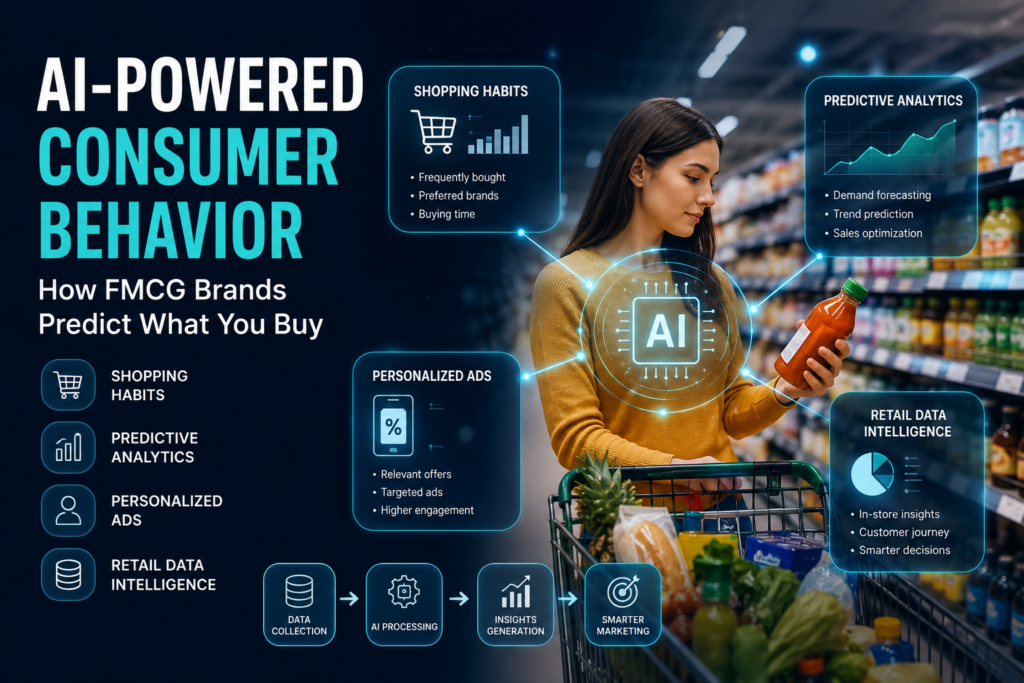
AI-Powered Consumer Behavior: How FMCG Brands Predict What You Buy
Introduction
Every time you search for a product online, scan a QR code, watch a product reel, or buy snacks from a supermarket, data is being created. Modern FMCG brands are now using Artificial Intelligence (AI) to analyze this data and understand consumer behavior better than ever before.
From predicting your next purchase to showing personalized ads on social media, AI is transforming how FMCG brands connect with customers. In 2026, consumer intelligence has become one of the biggest competitive advantages for brands in food, beverages, cleaning products, personal care, and household essentials.
What Is AI-Powered Consumer Behavior Analysis?
AI-powered consumer behavior analysis means using machine learning, predictive analytics, and customer data to understand:
- What customers buy
- When they buy
- Why they buy
- Which products they prefer
- What influences their decisions
Instead of guessing trends, FMCG companies now rely on real-time insights generated by AI systems.
1. Understanding Shopping Habits Through AI
AI helps FMCG brands track shopping habits across:
- E-commerce platforms
- Retail stores
- Mobile apps
- Social media
- Loyalty programs
What AI Can Detect
- Frequently purchased products
- Seasonal buying patterns
- Brand-switching behavior
- Price sensitivity
- Preferred shopping times
Example
If consumers suddenly start buying more eco-friendly cleaning products, AI tools can detect the trend early. Brands can then quickly adjust marketing campaigns or launch similar products before competitors.
2. Predictive Analytics: Forecasting Consumer Decisions
Predictive analytics uses historical data and AI algorithms to forecast future customer behavior.
FMCG Brands Use Predictive Analytics To:
- Predict future sales
- Optimize inventory
- Reduce product shortages
- Launch products at the right time
- Identify high-demand regions
Real-World Impact
Imagine a beverage company preparing for summer. AI can predict which cities will see increased demand for cold drinks based on weather, previous sales, and online trends.
This helps brands:
- Stock products smarter
- Reduce waste
- Improve delivery speed
- Increase profits
3. Personalized Advertising Powered by AI
Consumers today expect personalized experiences. AI allows FMCG brands to create highly targeted advertisements based on customer preferences.
AI Personalization Includes:
- Product recommendations
- Customized social media ads
- Personalized email campaigns
- Dynamic website content
- Location-based promotions
Example
If a user regularly buys baby care products, AI may show ads for diapers, baby lotion, or family-related offers instead of unrelated products.
This increases:
- Click-through rates
- Customer engagement
- Conversion rates
- Brand loyalty
4. Retail Data Intelligence: The Future of Smart FMCG
Retail data intelligence combines:
- Consumer purchase data
- Market trends
- Store analytics
- Online engagement
- Competitor performance
AI processes this information instantly to help brands make smarter decisions.
Benefits for FMCG Brands
- Faster trend detection
- Better pricing strategies
- Improved shelf placement
- Smarter promotions
- Enhanced customer experience
Smart Retail Example
Some stores now use AI-powered shelves and cameras to analyze which products customers pick up most often — even if they don’t purchase them.
This insight helps brands improve packaging, pricing, and product positioning.
Why AI Matters for FMCG Brands in 2026
The FMCG market is highly competitive. Consumer preferences change rapidly, and traditional marketing methods are no longer enough.
AI helps brands:
- Understand customers deeply
- React to trends faster
- Improve marketing ROI
- Create personalized experiences
- Build stronger customer relationships
Brands that successfully adopt AI are gaining a major advantage in both online and offline retail markets.
Challenges FMCG Brands Face With AI
While AI offers powerful benefits, there are still challenges:
- Data privacy concerns
- High implementation costs
- Need for skilled teams
- Data accuracy issues
- Consumer trust and transparency
Brands must balance personalization with ethical data usage.
The Future of AI in Consumer Behavior
The future of FMCG marketing will become even more data-driven. Emerging AI technologies will enable:
- Real-time shopping predictions
- Voice-based shopping recommendations
- Hyper-personalized product suggestions
- AI-generated advertising campaigns
- Smart retail automation
As AI continues evolving, FMCG brands will move from reactive marketing to predictive customer experiences.
Conclusion
AI-powered consumer behavior analysis is reshaping the FMCG industry. By understanding shopping habits, using predictive analytics, creating personalized ads, and leveraging retail data intelligence, brands can make smarter decisions and connect with consumers more effectively.
In 2026, AI is no longer optional for FMCG brands — it is becoming essential for growth, innovation, and long-term success.
SEO Meta Description
Discover how AI-powered consumer behavior is transforming FMCG brands through predictive analytics, personalized advertising, shopping insights, and retail data intelligence in 2026.